

Key Takeaways
Why Keeping a Log Is Worth the Effort
Most drivers rely on memory or dashboard warning lights to manage vehicle upkeep - neither is reliable. A maintenance log gives you a factual, timestamped record of every service your vehicle has received, removing the guesswork entirely.
Beyond personal scheduling, the log becomes evidence of responsible ownership. When you sell a vehicle, a documented service history signals to buyers that the car was cared for consistently. It can also matter for warranty disputes: if a manufacturer questions whether a required service was performed on time, your log is your defense.
For a deeper look at how service records affect resale and dispute outcomes, see our article on keeping maintenance records.
Start Simple, Stay Consistent
You don't need a specialized app or elaborate binder to begin. A basic notebook or a free spreadsheet template is more than sufficient. What matters most is that every service - from an oil change to a new wiper blade - gets recorded. Consistency over time is what makes the log valuable.
What to Record With Every Entry
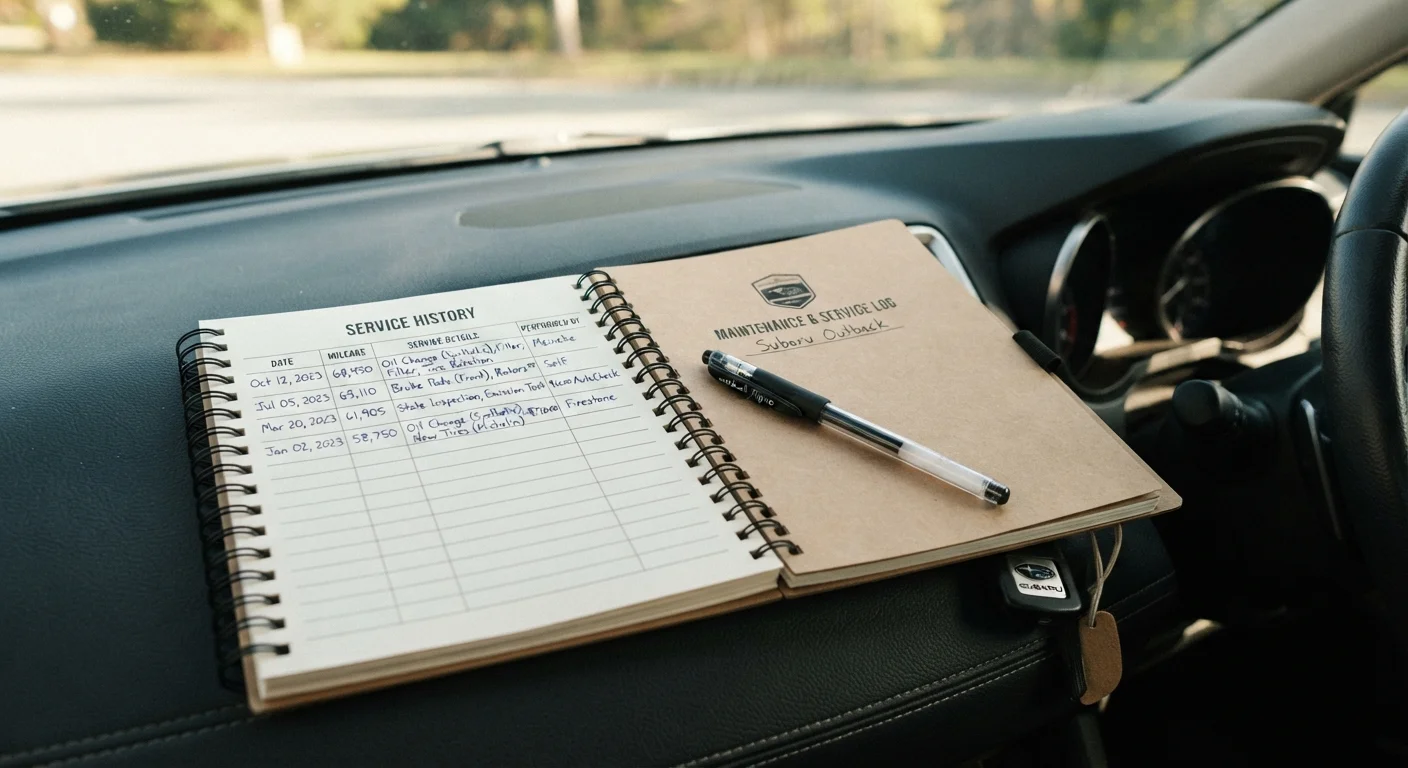
A useful log entry doesn't need to be elaborate. The goal is consistency, not exhaustiveness. Record these core data points each time any work is performed:
- Date - when the service occurred
- Odometer reading - the mileage at the time of service
- Service performed - specific task or tasks completed (e.g., oil change, tire rotation, brake fluid flush)
- Parts or fluids used - type and specification, such as oil viscosity grade or filter part number
- Who performed the work - shop name, technician, or "self" for DIY tasks
- Cost - useful for budgeting and spotting escalating repair trends
- Next due date or mileage - the interval at which this service should repeat
Knowing when a service is next due requires knowing your manufacturer's recommended intervals. Your owner's manual is the authoritative source - see our guide on reading your owner's manual maintenance schedule for help locating that information.
Record every service immediately after it's completed, not from memory later.
Delays introduce errors - wrong mileage figures, forgotten parts details, or skipped entries. An accurate log requires real-time recording. Even a 10-second note on your phone counts as a record you can formalize later.
Include DIY work with the same detail as professional shop visits.
Home-performed services are the most commonly omitted entries, yet they're just as relevant to the vehicle's history. Incomplete logs mislead future owners and make it harder to detect patterns.
Note the 'next due' mileage or date at the end of every entry.
Writing the next interval while the current one is fresh prevents you from having to look it up again and removes reliance on memory. It converts your log into a forward-looking maintenance calendar.
Review your log at each fuel fill-up or once a month for patterns.
Regular review turns a passive record into an active planning tool. Monthly check-ins keep upcoming intervals visible before they become overdue, rather than after.
Store your log in a consistent, recoverable location.
A log that gets lost during a vehicle sale or purse cleanout provides no benefit. Using cloud storage or keeping a backup copy at home ensures the record survives regardless of what happens to the physical document.
Choosing a Format That You'll Actually Use
The best log format is one you'll maintain consistently. Options range from a simple paper notebook kept in the glove box to dedicated apps that send service reminders automatically. A spreadsheet saved to cloud storage is a practical middle ground - easy to update and always accessible.
Whatever format you choose, tie it to a habit. Record each service entry immediately after work is done, not days later when details blur. This discipline matters most for DIY tasks, which are easiest to forget.
1 in 3
Drivers who skip or delay scheduled service
Industry surveys from automotive associations consistently find that a significant share of vehicle owners delay at least one manufacturer-recommended service per year.
Up to $500+
Potential extra repair cost from deferred maintenance
Automotive repair organizations note that neglecting routine service - such as fluid changes - can lead to component failures that cost substantially more than the original service would have.
Combine your log with a seasonal review cycle. Checking your records each time the season changes lets you confirm upcoming intervals before they're overdue. Our seasonal car care checklist pairs well with this habit.
Digital Apps Can Send Automatic Reminders
Several free and low-cost mobile apps are designed specifically for vehicle maintenance tracking. Many allow you to input service intervals and will alert you when a service is approaching. If you're prone to forgetting paper records, a digital format with built-in reminders may be easier to sustain long-term. Evaluate any app's privacy policy before entering personal vehicle or ownership information.
Using Your Log to Catch Problems Early
A log does more than track what was done - it reveals what keeps going wrong. If you notice that the same component is being replaced or adjusted repeatedly within short intervals, that pattern points to an underlying issue worth investigating with a qualified mechanic.
Similarly, cross-referencing repair costs over time helps you anticipate larger expenses and avoid the financial shock of deferred maintenance. Skipping scheduled maintenance compounds costs in ways that a running log makes visible before the damage is done.