

Key Takeaways
What's Actually at Stake When Records Go Missing
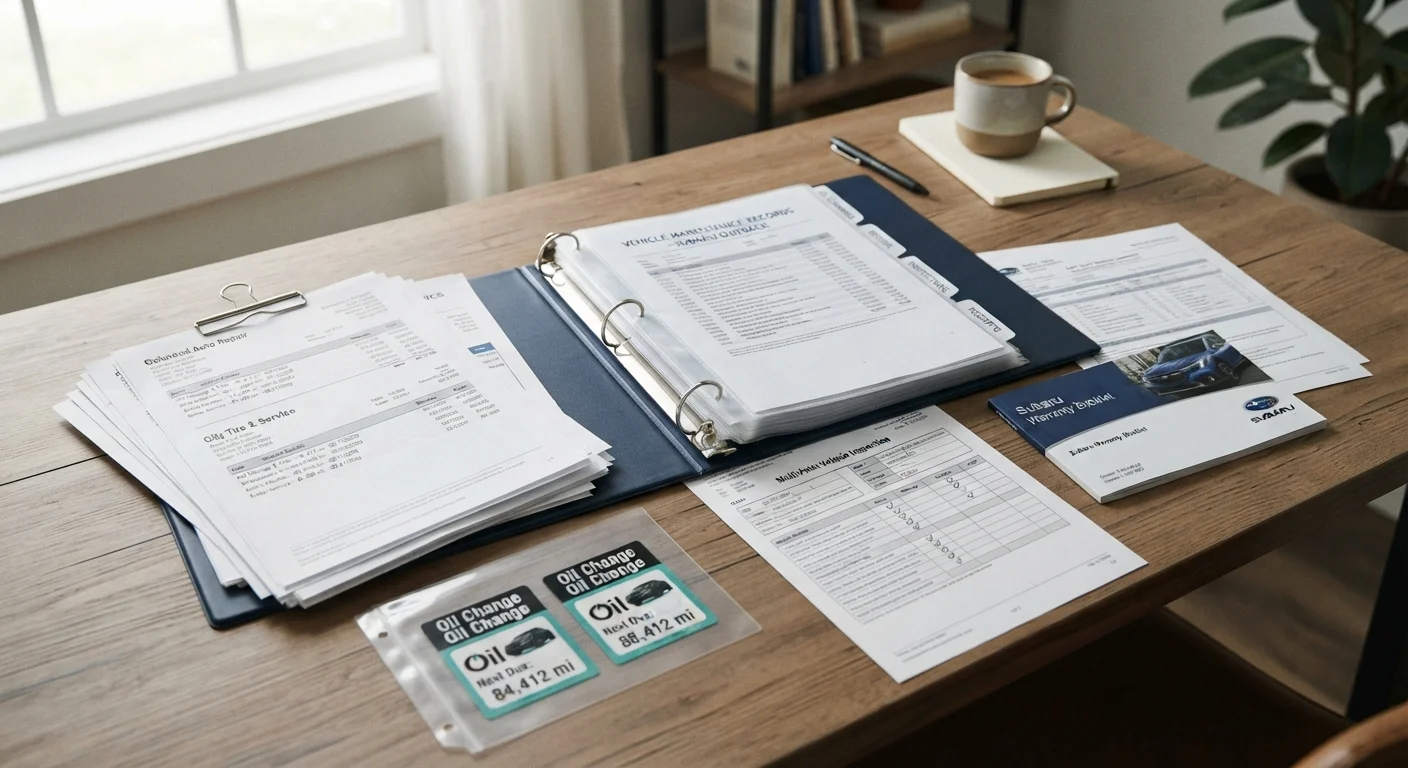
Most drivers think of maintenance records the way they think of old receipts - something to file away and forget. In practice, those documents carry real financial weight. When it comes time to sell your vehicle, a complete service history is one of the strongest signals a buyer has that the car was well cared for. Without it, buyers may negotiate harder or walk away entirely, even if the car runs perfectly.
Warranty coverage is another area where documentation matters. Many manufacturers and extended warranty providers require proof that scheduled maintenance was performed at the correct intervals. If a covered component fails and you can't show that related services were kept up, a claim can be denied - even if the failure wasn't caused by neglect. As noted in our article on why deferred maintenance compounds costs, gaps in upkeep tend to create downstream problems that are far more expensive than the skipped service itself.
There's also the matter of ownership disputes. If a vehicle is involved in an accident, a lemon law claim, or a sale gone wrong, documented maintenance history can establish what the seller knew - and when.
Best Practices for Keeping Useful Maintenance Records
Knowing records matter is one thing. Building a system that actually holds together over years of ownership is another. The following practices are grounded in how automotive professionals and experienced owners approach this task.
Save every service receipt - from dealerships, independent shops, and self-performed work.
Gaps in documentation can raise doubts for buyers and warranty administrators, even when the work was done correctly. A receipt from a quick-lube shop carries more weight than a verbal claim that the oil was changed.
Record the mileage at every service, not just the date.
Most manufacturer service intervals are mileage-based, not calendar-based. Tracking odometer readings lets you verify that services happened at the right intervals and anticipate what's coming due next.
Note what was inspected but not replaced, not just completed repairs.
Inspection notes demonstrate active monitoring, which matters to buyers and can help you spot gradual degradation over multiple service visits.
Keep records organized by category, not just chronologically.
When a specific system needs attention, searching through a single date-ordered pile is time-consuming and error-prone. Grouping records by system - engine, brakes, tires, electrical - makes it faster to answer specific questions.
Transfer records to any new owner at the point of sale.
A complete history only retains its value if it accompanies the vehicle. Handing over organized documentation at the time of sale demonstrates transparency and can support the asking price.
For a detailed starting point on what services belong in your log, see what to record in a maintenance log.
Quick Actions You Can Take Today
You don't need a perfect system to start. Even partial records are more useful than none, and small organizational steps now prevent larger headaches later.
Up to $500+
Potential resale premium for documented history
Automotive industry appraisers and consumer reports consistently note that verifiable service records can add measurable value at point of sale, particularly for vehicles over five years old.
1 in 3
Used car buyers who cite history as a top concern
Consumer surveys on used vehicle purchasing consistently rank service and maintenance history among the most important factors buyers evaluate before making an offer.
Records and Resale: The Numbers Behind the Habit
The connection between service history and resale value is well established among automotive appraisers and dealers. Vehicles with verifiable maintenance records tend to sell faster and at stronger prices than comparable vehicles without documentation. For context on how ownership decisions affect long-term value, see our overview of depreciation as the hidden cost of car ownership.
This is especially true for high-mileage vehicles. As explained in what the odometer doesn't tell you about road safety, mileage alone is a poor indicator of a vehicle's condition - maintenance history is what fills in the gaps. A 120,000-mile vehicle with a complete service record often inspires more confidence than an 80,000-mile car with nothing documented.
“Documentation is the difference between a car and a known car. Buyers and appraisers aren't just purchasing the vehicle - they're purchasing confidence in its history.”
— Automotive industry appraisal guidance, General principle cited in used vehicle valuation practice
Start your records from your owner's manual. If you haven't already, reading the maintenance schedule section gives you the authoritative intervals for your specific vehicle - the foundation any good record-keeping system is built on.
This article provides general vehicle ownership information for educational purposes. For guidance specific to your vehicle's warranty or service requirements, consult your manufacturer documentation or a qualified mechanic.