

Key Takeaways
Option A
Total Sugars
The complete picture of all sugar in a serving.
Best for: Understanding overall sweetness and sugar load per serving, regardless of source.
Option B
Added Sugars
The specific sugar the FDA wants you to track.
Best for: Comparing how much sugar was put into a product during processing, beyond what occurs naturally.
If you want to compare two products for overall sweetness
Total Sugars
Total Sugars gives you the full gram count of all sugars in a serving, making it useful for gauging how sweet a product is regardless of source.
If you're trying to reduce processed sugar intake
Added Sugars
Added Sugars isolates only the sugar added during production, which is the figure most relevant to dietary guidance on limiting discretionary sugar.
If you're evaluating a fruit, dairy, or vegetable product
Added Sugars
Natural sugars in these foods behave differently from added sugars; checking the Added Sugars line tells you whether the manufacturer sweetened the product beyond its natural state.
If you're reading a beverage label
Added Sugars
Most beverages derive the bulk of their sugar from added sources; the Added Sugars line quickly reveals how much sweetener went into the bottle. See our guide to beverage labels for more detail.
What Each Number Actually Measures
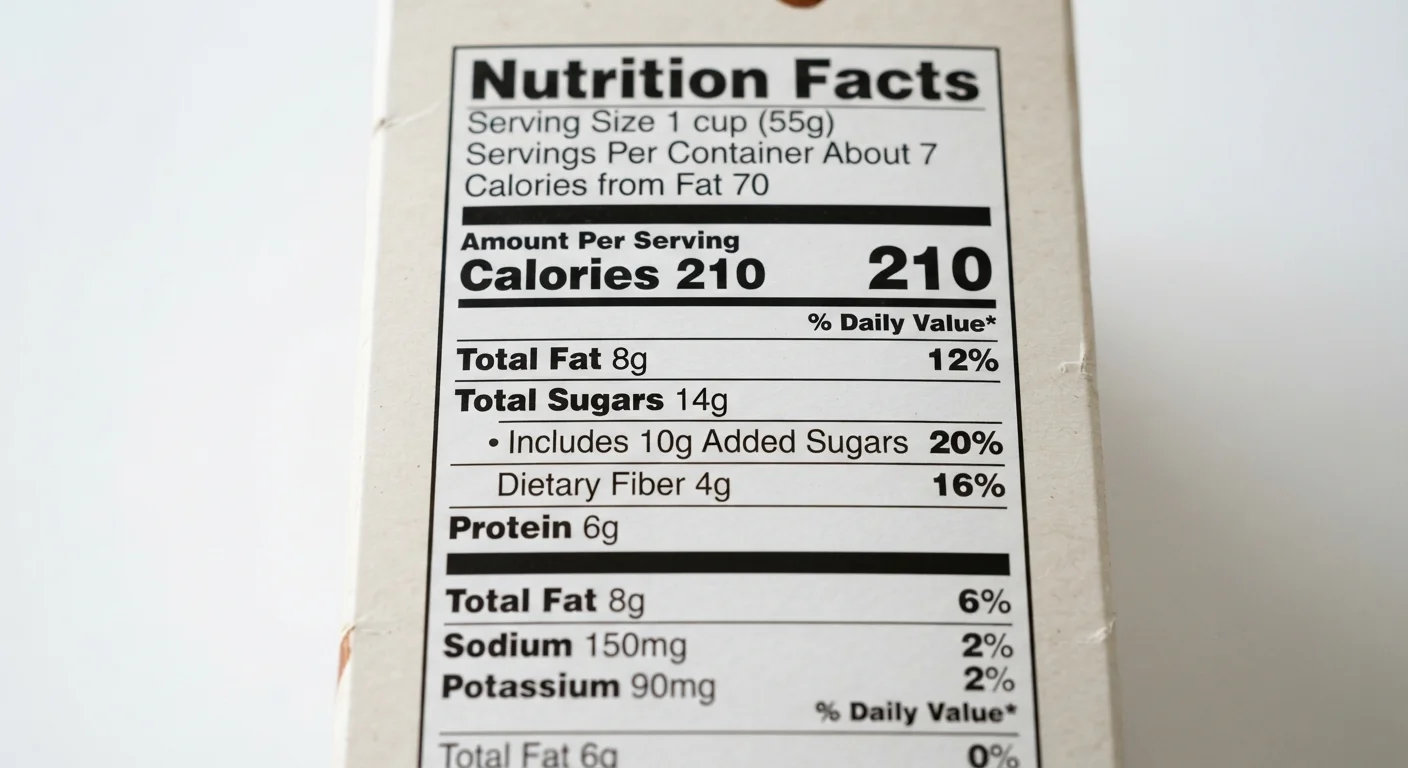
Total Sugars is the sum of every sugar molecule in a serving - lactose from milk, fructose from fruit, sucrose added during baking, high-fructose corn syrup in a sauce. It makes no distinction between sugars the ingredient naturally contained and sugars a manufacturer introduced.
Added Sugars, listed directly beneath and indented on the updated Nutrition Facts panel, counts only sugars that were incorporated during processing or preparation. This includes table sugar, honey, syrups, fruit juice concentrates used as sweeteners, and any other caloric sweetener added to the recipe.
The gap between the two numbers is revealing. A cup of plain whole-milk yogurt might show 12 g of Total Sugars and 0 g of Added Sugars - all of that sugar is lactose, which is inherent to dairy. A flavored yogurt of equal size might show 22 g of Total Sugars and 10 g of Added Sugars, meaning the manufacturer added 10 g of sweetener on top of the natural lactose. Both products display similar-looking total numbers, but they tell very different stories nutritionally.
For a broader walkthrough of how every line on the panel works together, see our practical guide to reading a Nutrition Facts panel.
| Criterion | Total Sugars | Added Sugars |
|---|---|---|
| What it counts | All sugars - natural and added | Only sugars added during processing |
| Includes lactose / fruit sugars | Yes | No |
| Has a % Daily Value | No | Yes (50 g = 100% DV) |
| Position on label | Main line under Carbohydrates | Indented beneath Total Sugars |
| Best used to | Gauge overall sugar content | Track discretionary sweetener intake |
| Example: plain yogurt | ~12 g (all natural lactose) | 0 g |
| Example: flavored yogurt | ~22 g | ~10 g |
Why the FDA Created a Separate Added Sugars Line
Before the 2016 update to the Nutrition Facts label - phased in through 2020 - manufacturers were only required to list Total Sugars. The FDA revised the label requirements based on the view, reflected in federal dietary guidelines, that added sugars contribute calories without proportional nutritional benefit and that Americans were consuming them in excess of recommended amounts.
By requiring a distinct Added Sugars line and a corresponding % Daily Value, the FDA gave consumers a standardized tool to assess and limit discretionary sweetener consumption. The Daily Value is set at 50 grams of added sugars per day for a 2,000-calorie diet, meaning a single product showing 25 g of Added Sugars already accounts for half that reference amount.
50 g
Daily Value for Added Sugars (2,000-calorie diet)
Established by the FDA as the reference amount for calculating % Daily Value on updated Nutrition Facts panels.
~17 tsp
Average daily added sugar intake, US adults
Estimates based on federal dietary survey data suggest many US adults exceed dietary guideline recommendations for added sugars.
10%
Recommended cap on calories from added sugars
The 2020-2025 Dietary Guidelines for Americans recommend limiting added sugars to less than 10% of total daily calories.
This distinction matters especially when evaluating products with health-adjacent marketing. A "low-fat" granola, for example, may compensate for removed fat with added sugar - a trade-off that only becomes visible when you look at the Added Sugars line rather than Total Sugars alone. Our article on why low-fat foods can still be high in sugar unpacks this pattern in detail.
Using Both Numbers Together When You Shop
Neither number is useless in isolation, but they answer different questions. Total Sugars tells you the full sugar load per serving. Added Sugars tells you how much of that load is a deliberate manufacturer choice rather than an inherent property of the food.
A practical approach: when evaluating any packaged product, glance at Total Sugars first for context, then check Added Sugars to understand how much of that figure you can attribute to processing. If Added Sugars is close to or equal to Total Sugars - common in sodas, candy, and many snack bars - you're looking at a product where sweetness is almost entirely manufactured.
Also pay attention to the ingredient list. Sugars added in manufacturing often appear under multiple names - cane syrup, maltose, dextrose, evaporated cane juice - which can obscure how prominently sweeteners feature in a recipe. Our explainer on how ingredient list ordering works explains how placement by weight reveals the true proportion of each ingredient.
For a checklist of label details worth scrutinizing - including misleading serving sizes and inflated health claims - see our label red flags guide.
When "No Added Sugars" Appears on Packaging
A "No Added Sugars" claim means the manufacturer did not incorporate caloric sweeteners during production - but the product can still contain significant Total Sugars from natural sources. 100% fruit juice, for example, may carry no added sugars yet deliver a concentrated natural sugar load without the fiber present in whole fruit. Always read both the claim and the Nutrition Facts panel together for full context.
This article provides general nutrition information and education, not personalized dietary or medical advice. Individuals with specific health conditions or dietary needs should consult a registered dietitian or qualified healthcare professional.