

Key Takeaways
Summary
18 items · 10–20 minutes
Why Nutrition Labels Deserve a Closer Look
The FDA's Nutrition Facts panel is one of the most useful tools available for making informed food choices — but it's also one of the most misread. Labels are designed to meet regulatory requirements, not to make interpretation effortless. Marketing language on the front of the package can contradict what the panel actually shows, and small formatting choices — like an unusually small serving size — can make a product appear far healthier than it is.
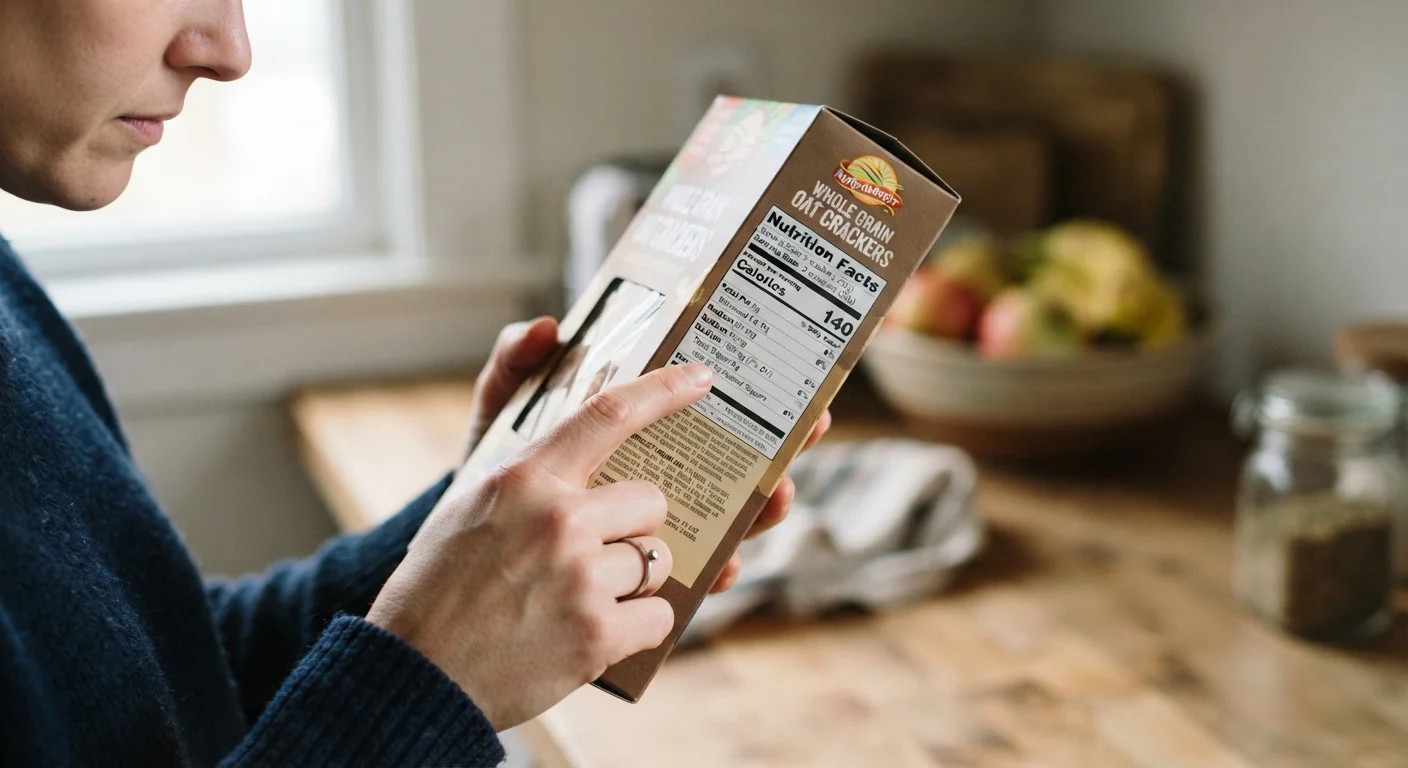
This checklist is designed to help you move through a nutrition label methodically, catching the details that are easy to overlook. It covers serving sizes, macronutrients, added sugars, sodium, ingredient lists, and front-of-pack claims. For a deeper dive into specific areas, see our plain-language guide to reading beverage labels or our article on added sugars vs. total sugars.
This article is for general informational purposes only and is not medical or dietary advice. Consult a registered dietitian or qualified healthcare professional for guidance tailored to your individual health needs.
Serving Size & Servings Per Container
Calories & Macronutrients
Added Sugars & Total Sugars
Sodium
Front-of-Pack Claims
% Daily Values & Micronutrients
Using the Checklist Effectively
Work through the checklist in order — serving size anchors every calculation that follows, so confirming it first prevents compounding errors. Once you've verified the serving, the macronutrient and micronutrient figures become meaningful for comparison.
Daily Values Are Based on a General Standard
The % Daily Values on every nutrition label are calculated using a 2,000-calorie-per-day reference diet. Your actual needs may be higher or lower depending on age, activity level, health status, and other individual factors. Use % DV as a directional tool for comparison rather than a precise prescription. A registered dietitian can help you interpret these figures in the context of your own dietary pattern.
Pay particular attention to the ingredient list as a cross-reference. Numbers on the Nutrition Facts panel summarize what's present, but the ingredient list — ordered by weight from most to least — reveals the hierarchy of what you're actually consuming. For a full explanation of how that ordering works, see our article on ingredient list ordering.
Front-of-pack claims deserve skepticism but not dismissal. A claim like "made with whole grains" may be technically accurate while whole grains appear near the bottom of the ingredient list. Similarly, "low fat" doesn't automatically mean low sugar — a dynamic explored in our piece on why low-fat foods can still be high in sugar. For context on how sodium claims and Daily Value percentages work together, our article on sodium on nutrition labels is a useful companion read.
Trans Fat Can Be Listed as Zero and Still Be Present
FDA regulations allow products to list 0g trans fat if a serving contains less than 0.5 grams. If a product is consumed in multiple servings, those trace amounts can accumulate. To identify whether trans fats are present, look for "partially hydrogenated oils" in the ingredient list — their presence indicates trans fat regardless of what the panel shows.
When you're eating out rather than buying packaged food, the nutrition picture changes significantly. Our article on calorie counts on restaurant menus explains what federal menu-labeling rules do — and don't — require chain restaurants to disclose.