

Key Takeaways
Places calorie information at the decision-making moment
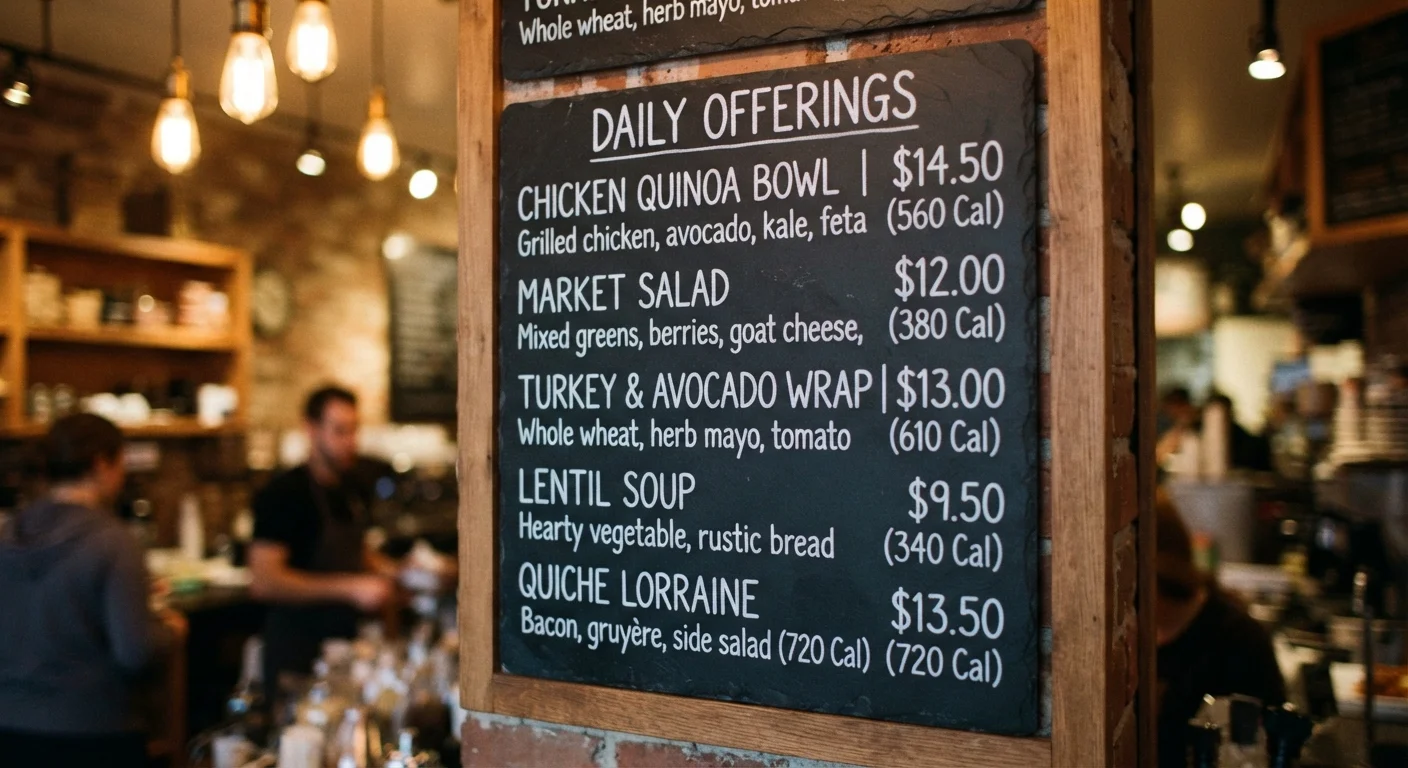
Diners see calorie counts while choosing, not after eating, making the information immediately actionable rather than an afterthought.
Creates upstream pressure to reformulate recipes
Some chain operators have reduced calorie-dense ingredients in response to mandatory disclosure, benefiting all diners regardless of whether they read the label.
Enables meaningful comparisons within a menu
Even as rough estimates, posted figures reveal large calorie differences between similar-sounding items, helping diners make relatively more informed comparisons.
Standardizes a minimum floor of nutrition transparency
The rule establishes a consistent expectation across thousands of locations, so diners encounter the same disclosure format at any covered chain.
Preparation variability undermines precision
Real-world cooking introduces portion, oil, and ingredient differences that can shift actual calorie content well above or below the posted average - sometimes by over 100 calories per item.
Only calories are displayed on the menu itself
Sodium, saturated fat, added sugars, and other nutritional data are not required on the menu board; diners must specifically request a written nutritional summary to access them.
Excludes most independent and small-chain restaurants
The 20-location threshold means independent restaurants, small regional chains, food trucks, and many delivery-only kitchens face no federal labeling obligation.
Can be misread as a precise, lab-verified figure
Menu labels present averages derived from standardized recipes, but the framing can lead diners to treat the number as an exact measurement rather than a reasonable estimate.
Daily specials and limited-time items are excluded
Items that appear on a menu for fewer than 60 days per year are exempt, creating gaps in coverage for rotating seasonal offerings.
Our Verdict
Menu calorie labeling is a genuine public health tool that makes a baseline nutritional fact visible at the point of decision. Its limitations - preparation variability, narrow nutrient scope, and uneven coverage - mean the posted number is a rough guide, not a precise nutritional accounting. Used alongside other information, it supports more informed choices without replacing broader nutritional awareness.
Menu calorie counts are most useful for diners who regularly eat at large chain restaurants and want a general sense of energy content to guide ordering decisions.
What the Federal Rule Actually Requires
The U.S. Food and Drug Administration's menu labeling rule, finalized under the Affordable Care Act, applies to restaurant chains and similar retail food establishments with 20 or more locations operating under the same name and offering substantially the same menu items. Covered businesses must display the calorie content of standard menu items clearly and conspicuously on menus and menu boards, alongside a statement directing consumers to ask for additional nutritional information - including sodium, total fat, and sugars - if they want it.
The rule covers sit-down chains, fast-food restaurants, bakery chains, and similar venues. It does not mandate calorie counts for condiments, daily specials, custom orders, or items that appear on the menu for fewer than 60 days per year. Covered restaurants are required to have the additional nutritional data available in written form upon request, but it does not need to be printed on the menu itself.
For a broader look at how nutrition information is structured across packaged and prepared foods, see Reading a Nutrition Label Without Getting Confused.
The Advantages of Visible Calorie Information
Posting calories where diners make decisions introduces nutritional awareness at the most actionable moment. Research published in peer-reviewed public health journals has found that calorie labeling at the point of purchase is associated with modest reductions in calories ordered in some consumer groups, particularly when the information is easy to find and interpret.
Places calorie information at the decision-making moment
Diners see calorie counts while choosing, not after eating, making the information immediately actionable rather than an afterthought.
Creates upstream pressure to reformulate recipes
Some chain operators have reduced calorie-dense ingredients in response to mandatory disclosure, benefiting all diners regardless of whether they read the label.
Enables meaningful comparisons within a menu
Even as rough estimates, posted figures reveal large calorie differences between similar-sounding items, helping diners make relatively more informed comparisons.
Standardizes a minimum floor of nutrition transparency
The rule establishes a consistent expectation across thousands of locations, so diners encounter the same disclosure format at any covered chain.
20+
Locations triggering federal labeling requirement
The FDA rule applies to restaurant chains and similar food service establishments operating 20 or more locations under the same name with substantially similar menus.
~100 cal
Potential gap between labeled and actual calories
Studies examining real restaurant items have documented discrepancies between posted and measured calorie content that can exceed 100 calories per item in either direction.
Beyond individual choices, the rule also creates accountability pressure on food service operators. Chains aware that calorie counts will be posted have, in documented cases, reformulated recipes to reduce calorie-dense ingredients. This upstream effect can benefit diners who never consciously consult the menu label.
The Limitations Worth Understanding
A posted calorie figure is an average derived from a standardized recipe. Real preparation in a kitchen involves human variation - portion size, cooking oil amounts, and ingredient ratios shift from location to location and shift from one cook to the next. Studies measuring actual versus labeled calorie content in chain restaurant items have found meaningful discrepancies in both directions, sometimes exceeding 100 calories per item.
Preparation variability undermines precision
Real-world cooking introduces portion, oil, and ingredient differences that can shift actual calorie content well above or below the posted average - sometimes by over 100 calories per item.
Only calories are displayed on the menu itself
Sodium, saturated fat, added sugars, and other nutritional data are not required on the menu board; diners must specifically request a written nutritional summary to access them.
Excludes most independent and small-chain restaurants
The 20-location threshold means independent restaurants, small regional chains, food trucks, and many delivery-only kitchens face no federal labeling obligation.
Can be misread as a precise, lab-verified figure
Menu labels present averages derived from standardized recipes, but the framing can lead diners to treat the number as an exact measurement rather than a reasonable estimate.
Daily specials and limited-time items are excluded
Items that appear on a menu for fewer than 60 days per year are exempt, creating gaps in coverage for rotating seasonal offerings.
Calories Are Only Part of the Picture
A low calorie count does not automatically signal a nutritionally balanced item. A dish can be modest in calories while being high in sodium, saturated fat, or added sugars - factors that matter for many health conditions. If those nutrients are relevant to your dietary decisions, ask your server for the restaurant's full written nutritional disclosure, which covered chains are required to make available. You can also check Nutrition Label Red Flags Worth Paying Attention To for guidance on spotting incomplete or misleading nutrition information.
The narrow scope of the required disclosure is another practical gap. Calories alone do not capture sodium, saturated fat, added sugars, or fiber - nutrients that matter considerably for people managing blood pressure, cardiovascular risk, or blood sugar. Sodium in particular can vary dramatically across seemingly similar items. For more on interpreting sodium figures, see Sodium on Nutrition Labels: What the Numbers Really Tell You.
The rule also excludes a large portion of the food-service market. Independent restaurants, food trucks, small chains with fewer than 20 locations, and many third-party delivery platforms are not covered. Diners who eat primarily at those venues may have little or no consistent access to calorie information.
How to Use Menu Calories Effectively
Treat the posted number as a directional estimate, not a lab-certified measurement. A 600-calorie entrée and a 1,200-calorie entrée do represent meaningfully different energy contributions even accounting for variability. Using calorie counts to compare options within the same menu - rather than to calculate a precise daily intake - is a realistic and practical application of the information.
If sodium, fat, or allergen content is relevant to your health decisions, ask the restaurant for the written nutritional information the rule requires them to provide. That document typically covers a fuller nutrient panel. The same habit applies when reading any packaged food or beverage label - understanding what a label does and does not disclose is its own skill. A Plain-Language Guide to Reading a Nutrition Label on a Beverage walks through that process for drink products specifically.
This article is for general informational purposes only and does not constitute medical or dietary advice. Consult a qualified healthcare or nutrition professional for guidance tailored to your individual health needs.