

Key Takeaways
A Different Kind of Cruise Altogether
When most Americans picture a cruise, they imagine a large ship calling at sun-drenched ports, with pools, entertainment, and shore excursions to city centers. Expedition cruising operates on an entirely different premise. The destination — its wildlife, geology, and raw environment — is the point, and the ship is simply the vehicle that gets you there.
These voyages sail to places like Alaska's Inside Passage, Norway's Svalbard archipelago, and Chilean Patagonia — regions where glaciers calve into open water, seabirds nest on volcanic rock, and humpback whales surface without warning. Standard itineraries skip these areas because they require smaller, specially designed vessels, expert staff, and a willingness to let nature dictate the schedule. If you've been comparing cruise styles, our overview of river and ocean cruises shows how broadly cruise formats can differ — expedition travel pushes that contrast even further.
Below are the defining characteristics that set expedition-style cruises apart — practical factors worth understanding before deciding whether this format fits your travel goals.
Small Ships Designed for Remote Access
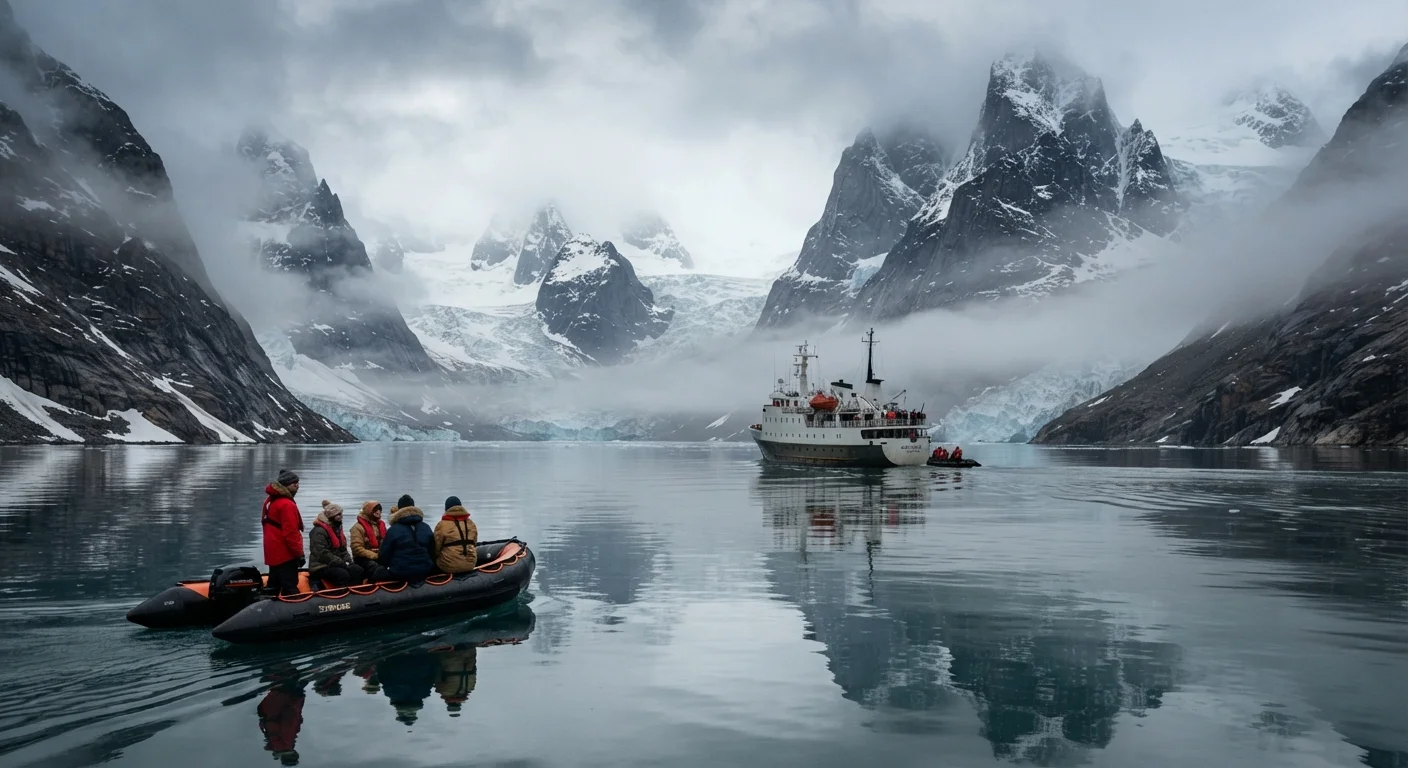
Expedition vessels typically carry between 50 and 200 passengers — a fraction of the 3,000-plus capacity found on mainstream cruise ships. That small footprint isn't just an aesthetic choice. Compact hulls can navigate narrow fjords, approach glacier faces, and enter shallow bays that large ships cannot safely reach. Many expedition ships carry ice-strengthened hulls rated for polar regions, along with fleets of inflatable Zodiac boats that ferry passengers directly onto shorelines, beaches, and ice floes where no dock exists.
Small hulls unlock remote bays, glacier faces, and ice-covered waters that larger ships must bypass entirely.
Expert-Led Programming Onboard and Ashore
What most distinguishes expedition cruises is the caliber and role of the onboard expedition team. Ships carry naturalists, marine biologists, ornithologists, glaciologists, and local historians who lead daily briefings, accompany every shore excursion, and provide real-time context for what passengers are observing. In Alaska, that might mean identifying whale feeding behavior; in Patagonia, explaining the movement of the Southern Patagonian Ice Field; in Norway's Svalbard, detailing how polar bear behavior shifts with sea ice coverage. This educational layer transforms wildlife sightings from passive observation into informed experience.
Onboard scientists and naturalists turn wildlife encounters into genuinely educational, context-rich experiences.
Flexible Itineraries Governed by Conditions
Expedition ships operate with what the industry calls a "guidelines, not guarantees" philosophy. A planned landing at a particular bay may be replaced by an unscheduled stop because a pod of orcas is feeding nearby, or because wind conditions make a different cove safer. Glaciers retreat, ice shifts, wildlife moves — and expedition captains and expedition leaders adjust plans accordingly. For travelers accustomed to precise port schedules and pre-booked shore excursions, this requires a meaningful shift in expectations. For those who embrace it, the unpredictability becomes a feature.
Itineraries adapt in real time — wildlife sightings, ice conditions, and weather routinely reshape daily plans.
Physical Preparation Matters More Than Usual
Boarding a Zodiac from a moving ship, stepping onto slippery rocks or uneven tundra, and hiking across terrain with no maintained trails are standard parts of an expedition day. Most operators rate activities by physical demand and offer alternatives for passengers with mobility limitations, but the overall format assumes a baseline level of fitness and agility. Packing also differs significantly: layering systems, waterproof outer shells, and sturdy footwear replace the resort wardrobes typical of Caribbean or Mediterranean cruising. Many operators provide rubber boots for wet landings, but checking packing lists carefully before departure is essential.
Zodiac landings and uneven terrain mean physical readiness and appropriate gear are genuine practical requirements.
The Destinations Themselves Are the Draw
Alaska's Inside Passage offers tidewater glaciers, temperate rainforest, and some of the world's densest concentrations of bald eagles, humpback whales, and brown bears. Norway's Svalbard archipelago — well above the Arctic Circle — provides encounters with polar bears, walrus, and vast seabird colonies against a backdrop of stark Arctic tundra. Patagonia's channels and fjords, stretching through southern Chile and Argentina, deliver towering granite peaks, calving glaciers, and Magellanic penguin colonies in landscapes that feel genuinely untouched. These are not destinations you move through — they are destinations you sit with, observe, and let change your sense of scale. That distinction separates expedition travel from nearly every other cruise format. For context on how mainstream cruise regions compare, see our Caribbean vs. Mediterranean cruise guide.
Alaska, Svalbard, and Patagonia offer wilderness encounters so immersive they redefine what travel can feel like.
Is an Expedition Cruise Right for You?
Expedition voyages demand more of travelers than a typical sailing. Zodiac landings can be physically demanding, weather frequently reshapes plans, and the absence of casinos and Broadway shows is intentional, not an oversight. That said, expedition ships vary considerably in comfort level — some offer genuinely luxurious cabins and fine dining alongside their wilderness programming.
Pack and Prepare with the Environment in Mind
Expedition operators typically publish detailed packing lists well before departure — treat these as mandatory, not advisory. Layering is more effective than a single heavy jacket, and waterproof outer layers matter even in summer sailings to Alaska or Patagonia. If you have mobility concerns or chronic health considerations, contact the operator directly before booking to understand which activities are realistically accessible.
Because these voyages often travel to remote regions with limited emergency infrastructure, travel insurance warrants especially careful consideration. Our guide to cruise-specific travel insurance explains why standard trip policies may leave gaps that matter more in isolated destinations. Route structure is another practical concern — many expedition itineraries are point-to-point rather than loop sailings, which affects logistics significantly. See our explanation of cruise itinerary styles to understand what that means for your travel planning. For travelers considering whether to go solo, expedition groups tend to be smaller and more collegial than those aboard large ships — a dynamic worth exploring in our article on solo cruise travel.
Expedition cruising isn't for everyone, but for those drawn to wilderness, wildlife, and genuine discovery, it represents one of the most immersive ways to travel.