

Key Takeaways
Option A
River Cruises
The intimate, destination-immersive option.
Best for: Travelers who want daily port stops, cultural depth, and a quieter, small-ship atmosphere on inland waterways.
Option B
Ocean Cruises
The expansive, amenity-rich experience.
Best for: Travelers who want onboard entertainment, resort-style facilities, and the flexibility to visit multiple coastal regions on one voyage.
If you prioritize exploring destinations deeply over onboard entertainment
River Cruises
River ships dock centrally in towns and cities, often allowing passengers to walk off independently and spend most of the day exploring at their own pace.
If you're traveling with kids or want resort-style amenities at sea
Ocean Cruises
Large ocean ships offer pools, live shows, multiple restaurants, kids' clubs, and activities that keep diverse groups entertained throughout the voyage.
If motion sickness or open-water sailing is a concern
River Cruises
Inland waterways are calm and sheltered, so significant ship movement is rarely an issue — a meaningful consideration for sensitive travelers.
If you want to cover multiple continents or distant regions in one trip
Ocean Cruises
Ocean itineraries can span thousands of miles, connecting ports across different countries or even continents in a single sailing.
If you prefer a quieter, socially intimate travel group
River Cruises
With passenger counts usually under 200, river ships feel more like a small community, making it easier to connect with fellow travelers and crew.
Scale and Ship Size: The Most Obvious Difference
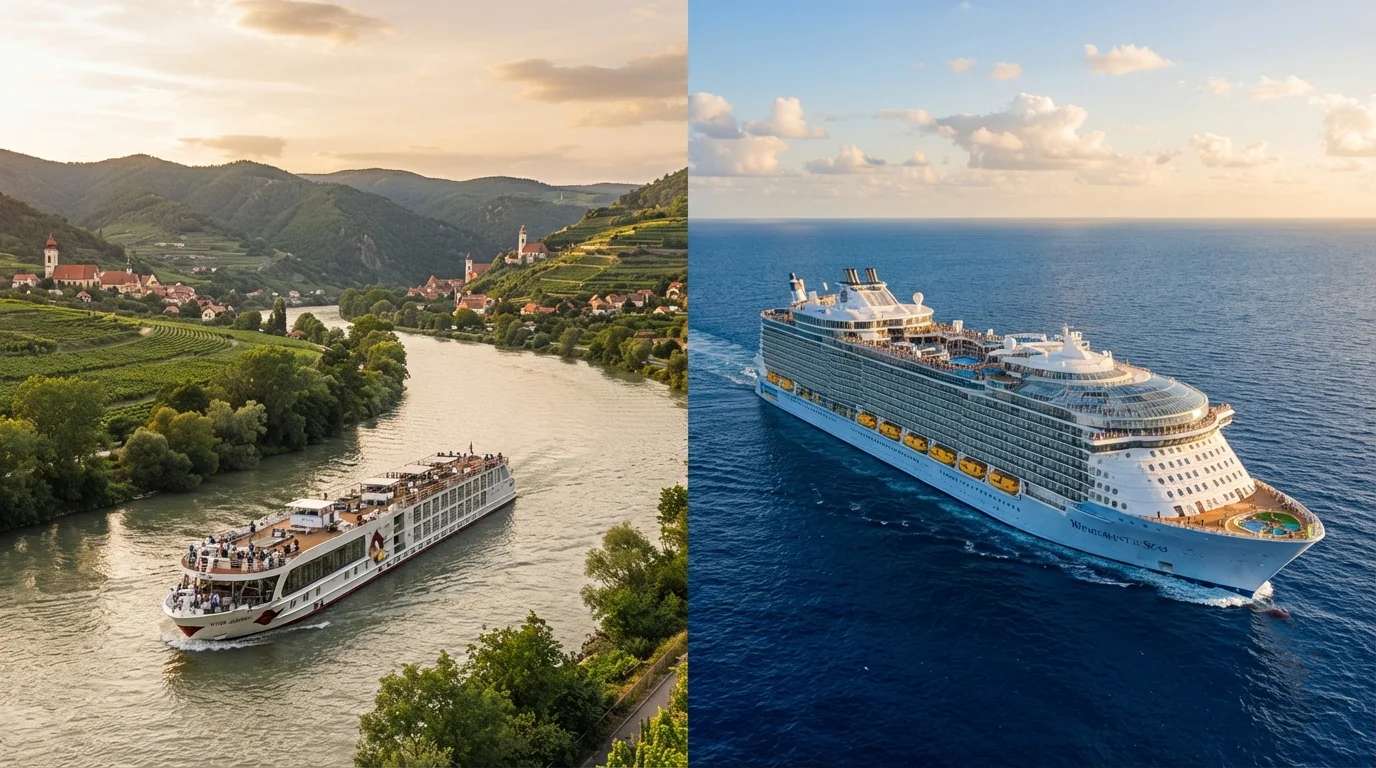
The physical contrast between river and ocean ships is striking. River cruise vessels are engineered to fit the locks, bridges, and shallow channels of inland waterways like the Rhine, Danube, Mekong, and Mississippi. That means ships typically carry between 100 and 200 passengers, with a long, low profile and few decks above water. Ocean cruise ships, by contrast, range from mid-size vessels carrying around 700 passengers to the largest ships afloat — some accommodating over 6,000 guests — with multiple decks of staterooms, entertainment venues, and open-deck amenities.
This difference in scale shapes almost everything else about the experience: the social atmosphere, the range of onboard activities, the dining options, and even how you feel physically on the water. If you've ever wondered how itinerary structure plays into cruise planning, understanding loop, repositioning, and point-to-point routes helps contextualize how both cruise types approach their routes differently.
| Criterion | River Cruises | Ocean Cruises |
|---|---|---|
| Typical passenger count | 100–200 guests | 700–6,500+ guests |
| Ship size | Small, narrow vessels | Mid-size to massive |
| Port location | Often docks in town centers | Usually commercial harbor areas |
| Onboard amenities | Simple: dining room, lounge | Extensive: shows, pools, dining |
| Water conditions | Calm, sheltered waterways | Open sea, varying conditions |
| Geographic reach | Inland Europe, Asia, Americas | Global coastal destinations |
| Typical fare inclusions | Often includes excursions, drinks | Varies widely by line |
| Pace | Shore-focused, unhurried | Balances sea days and ports |
Destinations and Port Access: Where You Actually End Up
River cruises earn much of their appeal from where the ship docks. Because the vessel travels through the interior of a country rather than along coastlines, it can tie up directly in historic town centers — often within walking distance of medieval squares, local markets, and cultural landmarks. Passengers typically spend six to eight hours ashore each day, and many ports allow independent exploration without a booked excursion.
Ocean cruise ports, while numerous and geographically diverse, are frequently located in commercial harbor districts that require a shuttle, taxi, or organized tour to reach city centers. That said, ocean itineraries unlock destinations simply unreachable by river — the Caribbean, Alaska, the Norwegian fjords, and the Mediterranean coast among them. For anyone weighing those coastal regions specifically, comparing the Caribbean and Mediterranean cruise experiences offers a useful breakdown of what each region actually delivers on the ground.
~180
Average river cruise passenger capacity
Most river ships are built to hold between 100 and 200 passengers, a design constraint imposed by the locks and bridges of inland waterways.
6,000+
Passengers on the largest ocean ships
The world's largest ocean cruise vessels can accommodate over 6,000 guests across multiple decks of staterooms and amenities.
~30+
Major river cruise routes worldwide
Active river cruise routes span Europe, Southeast Asia, South America, and North America, according to cruise industry overviews.
Onboard Experience: Amenities, Pace, and Social Atmosphere
Ocean ships invest heavily in the onboard product. Broadway-style shows, rock-climbing walls, surf simulators, multiple specialty restaurants, spas, and nightclubs are all common features on larger vessels. For many travelers, particularly families and groups with varied interests, the ship itself is a significant part of the vacation.
River cruise ships, by design, keep the onboard offering simpler: a single main dining room, a lounge or bar, a small sundeck, and sometimes a fitness room or spa. Guided lectures about the next port, wine tastings featuring regional varieties, and evening entertainment tend to be low-key. The rhythm is more deliberate — days are structured around time ashore rather than onboard programming. Common misconceptions about cruising often include the idea that all ships feel the same, which the river-vs-ocean divide quickly dispels.
Motion and Seasickness on Each Type
Travelers concerned about motion sickness often find river cruises significantly more comfortable, as inland waterways produce little to no vessel movement. Ocean cruises can involve noticeable swell, particularly on open-water crossings or in rough weather. Modern ocean ships use stabilizers to reduce rolling, but those with high sensitivity should factor this into their decision. If ocean sailing is a concern, consult a healthcare provider about management options before booking.
Who Each Style Suits — and What to Consider Before Booking
River cruises tend to attract travelers who already enjoy cultural travel on land and want the logistical simplicity of unpacking once while still moving through multiple destinations. The format rewards curiosity and independent exploration. Ocean cruises appeal to a broader audience — including first-time cruisers, families, large groups, and anyone who wants destination variety alongside substantial onboard entertainment.
Solo travelers will find considerations specific to each type: river ships' small size creates a naturally sociable environment, while ocean lines have increasingly added dedicated solo cabins and social programming. For more on that dynamic, the realities of solo cruising covers what to expect regardless of ship size. Finally, neither type of cruise is uniformly more affordable — river cruises often include more meals, excursions, and drinks in the base fare, while ocean cruises can range from budget-accessible to ultra-luxury depending on the line chosen. Always compare what's actually included before drawing cost conclusions.
This article is for general informational purposes only. Prices, availability, itineraries, and onboard offerings vary by cruise line and change over time. Verify all details directly with providers and consult official government sources for current entry, visa, and health requirements before traveling.