

Key Takeaways
Option A
Caribbean Cruises
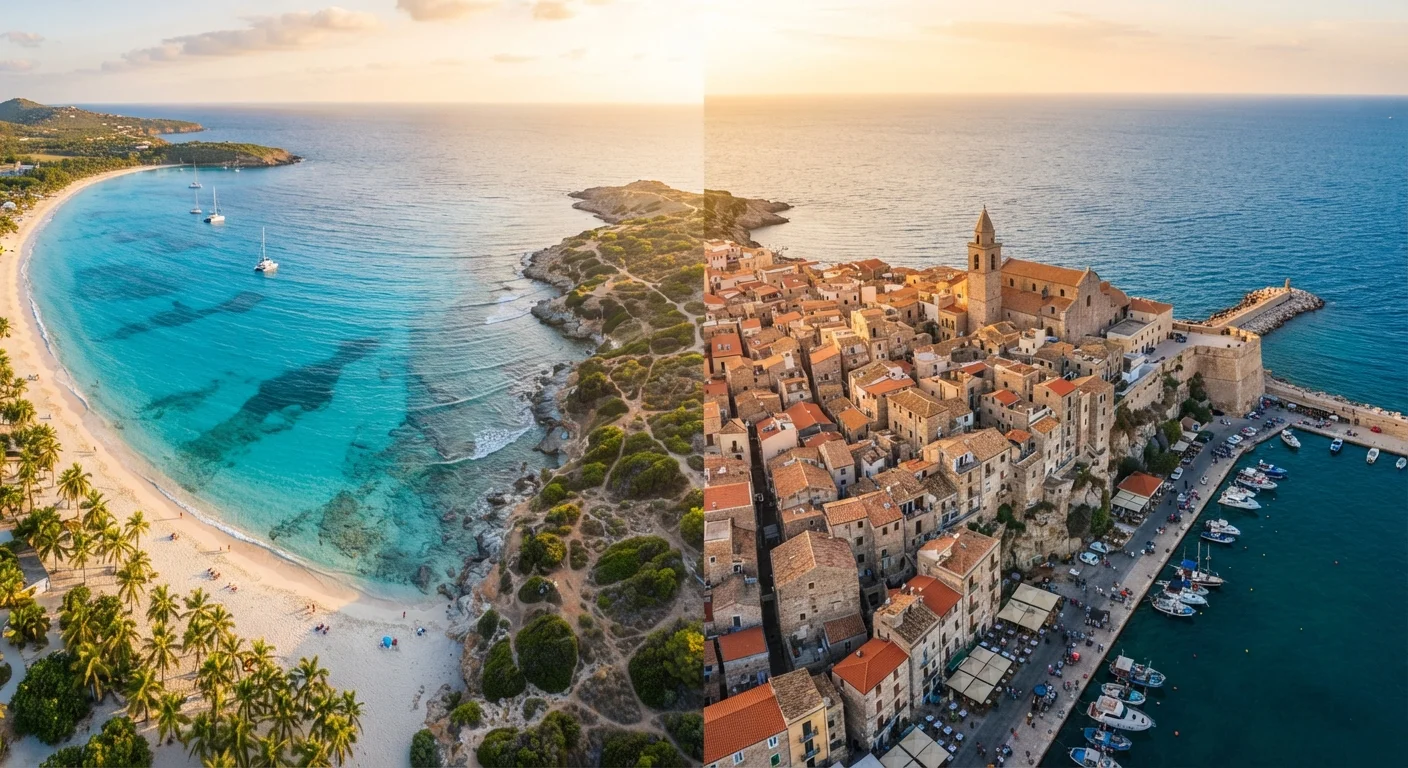
The sun-soaked, beach-forward classic.
Best for: Travelers who want warm weather year-round, easy logistics from US ports, and a relaxed, resort-style pace.
Option B
Mediterranean Cruises
The culturally immersive, history-rich alternative.
Best for: Travelers who want diverse countries, ancient landmarks, and a mix of culinary and cultural depth in a single itinerary.
If you want a warm-weather escape with minimal flight hassle
Caribbean Cruises
Many US cities have direct embarkation ports, and the Caribbean's consistent tropical climate means you can plan confidently any time of year.
If cultural immersion and historical depth matter most to you
Mediterranean Cruises
A single Mediterranean sailing can take you through multiple countries and millennia of history, from Roman ruins to Renaissance art to Ottoman architecture.
If you're cruising for the first time and want a familiar, low-pressure introduction
Caribbean Cruises
English is widely spoken at Caribbean ports, logistics are straightforward, and the relaxed beach pace suits first-time cruisers well.
If you're traveling between late spring and early fall and want the most daylight and variety
Mediterranean Cruises
Mediterranean summers offer long days, ideal sightseeing weather, and ports that deliver genuine cultural contrast from one stop to the next.
If budget is a primary constraint
Caribbean Cruises
Avoiding transatlantic airfare and sailing from a US home port can meaningfully reduce total trip cost, particularly for families or longer sailings.
Climate and Timing: When You Can Go
The Caribbean's biggest practical advantage is its calendar flexibility. Warm, humid weather persists year-round, with water temperatures rarely dropping below the mid-70s Fahrenheit. The primary caveat is hurricane season, which runs roughly June through November. Sailings still operate during this period, but itineraries may shift on short notice and travel insurance becomes especially worth considering.
The Mediterranean operates on a tighter seasonal window. Most cruise lines concentrate their European sailings between May and October, when warm, dry weather makes sightseeing comfortable and ports are fully operational. Shoulder months — May and October — offer lighter crowds and moderate temperatures, while July and August bring peak heat and heavy tourist traffic at major sites. Winter sailings exist but are far less common, and some smaller ports reduce services significantly.
Hurricane Season: What It Actually Means for Cruisers
Sailing in the Caribbean between June and November doesn't automatically mean your trip will be disrupted. Cruise lines monitor weather closely and reroute ships when necessary, often substituting alternate ports on short notice. That said, travelers sailing during peak hurricane months should understand that itinerary changes are possible and that comprehensive travel insurance — including trip interruption coverage — is worth evaluating carefully before booking.
Port Experience: Beach Days vs. City Days
What awaits you when the ship docks is perhaps the sharpest difference between the two regions. Caribbean ports tend to center on natural environments — beaches, snorkeling sites, and outdoor activities. Ports like St. John, Cozumel, and Barbados are genuinely beautiful and offer memorable water experiences, but the cultural and historical layers are comparatively thin. Days ashore often feel like resort extensions rather than deep explorations.
Mediterranean ports frequently serve as gateways to major world cities and UNESCO World Heritage Sites. A single itinerary might put you within reach of the Colosseum in Rome, the Acropolis in Athens, Dubrovnik's medieval walls, and the souks of Kotor — all within one or two weeks. The density of meaningful shore excursion options is a genuine differentiator, though it also means more planning and often more walking.
| Criterion | Caribbean Cruises | Mediterranean Cruises |
|---|---|---|
| Typical season | Year-round (hurricane risk Jun–Nov) | May–October primarily |
| US embarkation ports | Many — FL, TX, NY, SC and more | None — international flights required |
| Port character | Beaches, snorkeling, nature | Historic cities, museums, ruins |
| Cultural diversity per sailing | Moderate — similar island cultures | High — multiple countries and languages |
| Overall pace | Relaxed, resort-style | Active, sightseeing-focused |
| Typical total trip cost (US traveler) | Lower — no transatlantic airfare | Higher — international flights add up |
| English accessibility at ports | Very high | Variable by country |
For travelers interested in mixing cruise formats with land-based exploration, our guide to loop, repositioning, and point-to-point itineraries explains how route structure shapes the overall experience.
Logistics, Cost, and Practical Planning
For US-based travelers, the Caribbean has a structural cost advantage: dozens of embarkation ports along the East Coast, Gulf Coast, and Florida mean many travelers can drive to their ship or catch a short domestic flight. That alone can save hundreds — or more — per person compared to a transatlantic flight to Barcelona or Rome.
Mediterranean cruises require factoring in international airfare, and European port fees and taxes tend to be higher. Onboard spending patterns may also differ — Mediterranean itineraries often inspire more excursion spending given the historical sites on offer. That said, European sailings tend to attract a different mix of passengers, and the overall experience can feel more destination-driven than ship-driven.
3 of the top 5
World's busiest cruise homeports are in Florida
According to the Florida-Caribbean Cruise Association, Miami, Port Canaveral, and Port Everglades consistently rank among the highest-volume cruise embarkation points globally.
~60%
Of all cruise passengers originate from North America
Cruise Lines International Association (CLIA) data consistently shows North American travelers represent the largest share of global cruise demand, shaping Caribbean route dominance.
20+
Countries reachable on a single Mediterranean sailing
Depending on the itinerary, a two-week Mediterranean cruise can touch ports across Italy, Greece, Croatia, Spain, France, Turkey, and beyond within a single voyage.
If you're weighing a cruise against an overland road-style trip, our comparison of US East and West Coast road trips offers a useful parallel look at how region shapes a vacation's rhythm.
It's also worth reading our breakdown of common cruising myths before committing to either region — some first-timer assumptions about cruise travel don't hold up on either ocean.
Pace, Audience, and What Each Region Does Best
Caribbean cruises tend to attract passengers who want the ship itself to be part of the vacation — pools, entertainment, dining, and amenity-rich sea days. The balance between onboard time and port time often tips toward relaxation rather than immersion. This isn't a flaw; for many travelers, that's exactly the point.
Mediterranean sailings reward those who treat the ship primarily as transportation and accommodation. Ports are so rich that travelers often wish they had more time ashore rather than less. The pace can feel demanding for travelers who want genuine downtime, and popular sites like the Vatican or Santorini can involve significant crowds during peak months.
Solo travelers may find meaningful differences between the two regions as well — our look at solo cruising dynamics addresses how ship culture and port depth can shape the single-traveler experience. And for those drawn to neither region's mainstream appeal, expedition cruises to Alaska, Norway, and Patagonia represent a very different category entirely.
This article provides general travel information for planning purposes only. Itineraries, port availability, entry requirements, and travel advisories can change. Always verify current conditions with official government sources and your cruise line before traveling.