

Key Takeaways
Our Verdict
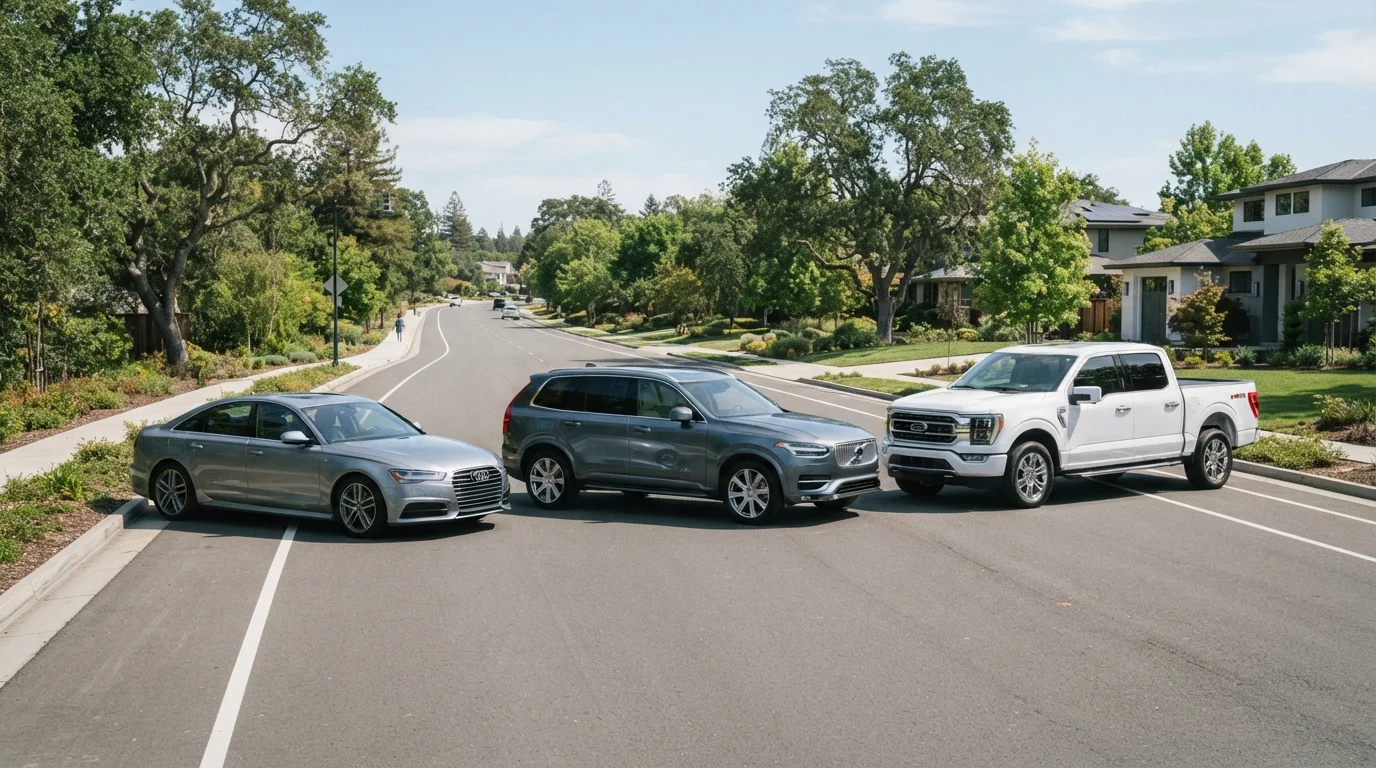
Sedans suit drivers who prioritize handling precision and urban efficiency. SUVs work well for families and mixed-terrain driving when handled with awareness of their limitations. Trucks make sense for those with genuine towing, hauling, or off-road needs - but demand a real adjustment in driving habits. The right fit depends on matching the vehicle's design strengths to your actual daily driving life.
| Best for | Recommended |
|---|---|
| City and suburban commuters who value nimble handling | Sedan |
| Families needing passenger space and versatility across varied roads | SUV |
| Drivers with consistent towing, hauling, or heavy-duty work demands | Truck |
| Those uncertain between SUV and crossover capabilities | SUV or Crossover - research the platform differences |
Why Body Style Is a Safety and Usability Decision
Choosing between a sedan, SUV, or truck often feels like a lifestyle preference, but the decision carries real implications for how safely and confidently you'll operate the vehicle every day. Each body style has a distinct center of gravity, visibility profile, braking behavior, and blind zone geometry - all of which affect how you interact with traffic, pedestrians, and road conditions.
Automakers design each body style with different priorities in mind. Understanding those trade-offs - not just the cargo space or horsepower - is what separates an informed choice from one you may regret after a close call on the highway. See our guide to common vehicle-sizing misconceptions for a deeper look at how shoppers often go wrong before they even start a test drive.
Sedans: Handling Precision and Lower Risk Profile
Sedans are built on low-slung platforms with a center of gravity closer to the road. This geometry makes them more resistant to rollover in evasive maneuvers and gives drivers more immediate, predictable steering feedback. Stopping distances are generally shorter than comparably sized trucks and larger SUVs because there's less vehicle mass to decelerate.
The trade-off is reduced cargo volume and less ground clearance, which limits capability in deep snow or off-pavement conditions. Visibility from the driver's seat tends to be lower, which can feel like a disadvantage in heavy traffic - though it's offset by tighter turning radii and easier parking in congested urban environments.
For drivers whose lives center on highways, city streets, and suburban commutes, a sedan's dynamics are genuinely well-matched to those conditions. If your driving terrain doesn't demand high clearance or load-hauling, the sedan's physics work in your favor. The choice between front-wheel drive and all-wheel drive also applies here - many sedans are available in both configurations, and that decision matters in rain and snow.
Test Drive in Your Actual Conditions
A dealership test drive through calm streets doesn't tell you how a vehicle handles in rain, on a highway on-ramp, or in a tight parking garage. If possible, arrange to drive in conditions that mirror your daily routine before committing. Ask specifically about the vehicle's stability control behavior and visibility aids - these matter more day-to-day than peak horsepower.
SUVs: Versatility With Caveats
The popularity of SUVs reflects their genuine versatility - elevated seating, more cargo room, and available all-wheel drive make them practical for families and mixed-condition driving. But that higher ride height comes with a higher center of gravity, which historically contributed to elevated rollover rates in full-size SUVs before electronic stability control became standard.
Modern SUVs have largely addressed the worst of these concerns through stability systems and suspension refinements. Still, the physics haven't changed: taller vehicles require more care in fast lane changes and sharp curves. Drivers switching from sedans should recalibrate their speed expectations in corners.
It's also worth knowing that the term "SUV" covers a wide range of vehicles. Many models sold as SUVs are technically crossovers built on car-based platforms, which handle more like sedans than traditional body-on-frame SUVs. That distinction affects how the vehicle performs in a panic stop or evasive maneuver. Our article on crossover vs. SUV platform differences explains why that label gap matters for real-world driving.
| Sedan | SUV / Crossover | Pickup Truck | |
|---|---|---|---|
| Center of gravity | Low - stable in curves | Medium to high - varies by type | High - especially unladen |
| Rollover resistance | High | Moderate (improved with ESC) | Lower, especially when cornering fast |
| Stopping distance | Shorter relative to size | Moderate | Longer, especially when empty |
| Blind zone size | Smaller | Moderate | Large front and rear zones |
| Cargo capacity | Limited to trunk | Flexible interior + roof | Large open bed + towing |
| Urban maneuverability | Excellent | Good to moderate | Challenging in tight spaces |
| All-weather versatility | Limited ground clearance | Good with AWD | High clearance, strong 4WD |
Trucks: Capability That Demands Adjusted Habits
Full-size pickup trucks are purpose-built for towing, hauling, and off-road durability. For drivers who genuinely need those capabilities, trucks deliver real value. But operating a truck safely on public roads requires a deliberate adjustment in driving habits that many new truck owners underestimate.
Trucks have substantially longer stopping distances than passenger cars, particularly when unladen - an empty truck bed reduces rear-axle weight, which can cause the rear wheels to lock up or lose traction under hard braking. Blind zones at the front and rear are considerably larger than those of sedans or most SUVs, creating real risk in parking lots and low-speed environments. Our detailed piece on truck-specific visibility and braking considerations covers these dynamics in depth.
Lane changes and backing maneuvers require more deliberate mirror use and awareness of the truck's extended footprint. Drivers who choose a truck primarily for its image rather than its utility often find daily usability - fuel costs, parking difficulty, urban maneuverability - erodes their satisfaction quickly.
Don't Overestimate Truck Maneuverability
Many drivers underestimate how much a full-size truck's length and turning radius differ from a passenger car. Parking structures, drive-throughs, and narrow urban streets can be genuinely difficult to navigate. Before choosing a truck for primarily urban use, consider whether the vehicle's size will create more daily friction than it resolves.
For a broader look at how vehicle size interacts with safety outcomes for all road users, see understanding safety across vehicle size categories.
Matching Body Style to Your Driving Life
The most useful question isn't "which body style is best" but rather "which body style fits my actual driving habits." Consider these factors honestly before deciding:
- Daily environment: Urban and dense suburban driving favors sedans and smaller crossovers. Rural or semi-rural driving with unpaved roads or significant weather challenges may justify an SUV or truck.
- Passenger and cargo needs: Frequent carpooling or family hauling tips the scales toward SUVs. Regular towing or payload work points to trucks. Neither is necessary for solo commuting.
- Driving confidence with larger vehicles: Trucks and full-size SUVs require a learning curve. If you're not prepared to invest time in that adjustment, a mismatch between vehicle and driver skill creates risk.
- Fuel and ownership costs: Larger vehicles typically carry higher fuel, insurance, and maintenance costs. These are real factors in long-term ownership satisfaction. The Owning a Vehicle hub covers insurance, registration, and cost considerations across vehicle types.
No body style is universally safer or more practical. The right choice is the one whose design strengths align with the roads you actually drive, the loads you actually carry, and the habits you're genuinely prepared to adopt.