

Key Takeaways
Start here
Why the Nutrition Facts Panel Exists
Next
Serving Size: The Foundation of Every Number
Build on it
Calories, Macronutrients, and What They Mean
Go deeper
Percent Daily Value: A Useful Benchmark
When you're ready
Vitamins, Minerals, and the Bottom Section
Apply it
Putting It All Together
Why the Nutrition Facts Panel Exists
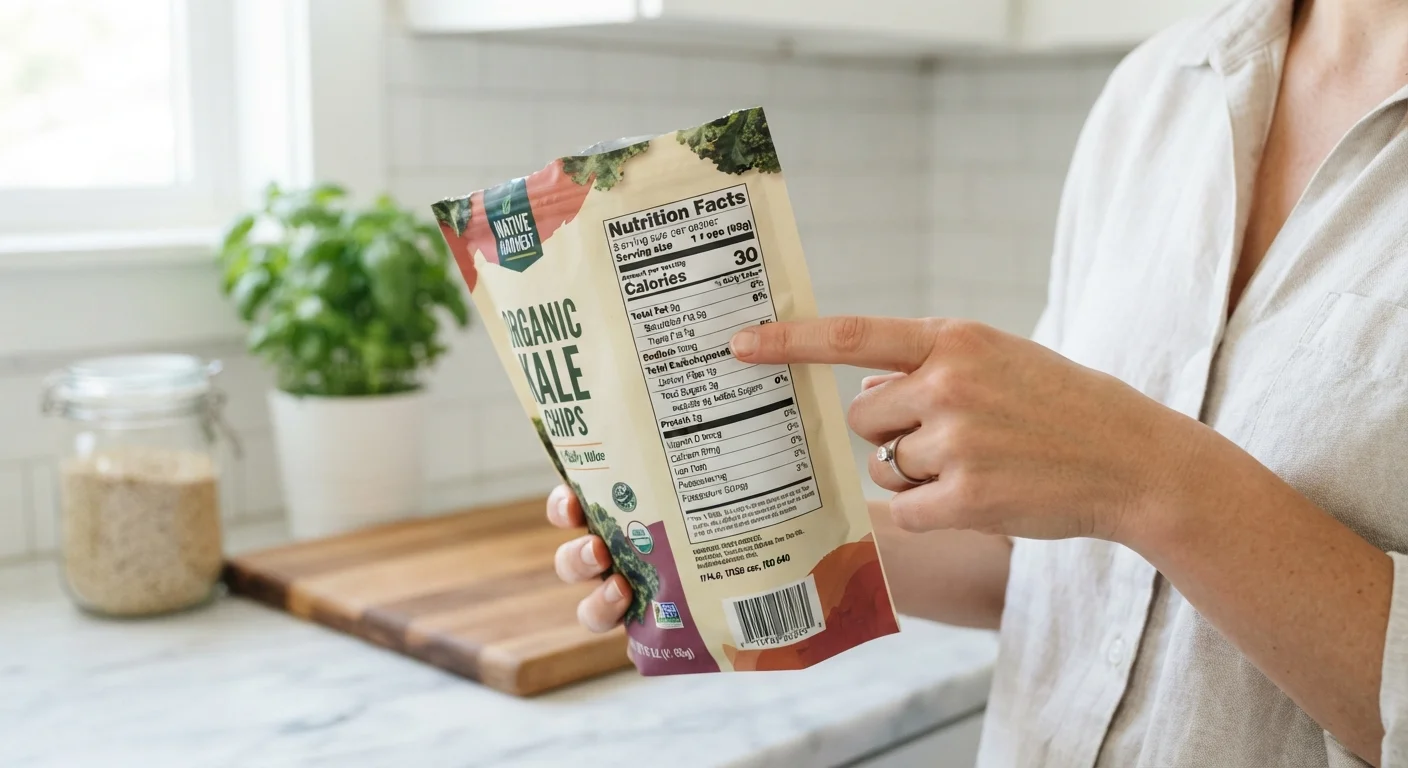
The Nutrition Facts panel is a standardized label the US Food and Drug Administration (FDA) requires on most packaged foods. Its purpose is straightforward: give consumers consistent, comparable information about what they're eating so they can make informed choices. The current format, updated in 2016 and phased in through 2020, reflects what nutrition science and public-health research have identified as most relevant to today's diet-related concerns.
Front-of-package marketing - words like "wholesome," "natural," or "light" - is regulated but can still be incomplete or framed selectively. The panel on the back or side cuts through that by presenting actual numbers in a fixed format. See our guide to nutrition label red flags for a closer look at claims that deserve extra scrutiny.
Serving Size
A standardized reference amount set by the FDA representing how much of a food is typically consumed at one time. All nutrition numbers on the label are calculated for this amount.
% Daily Value (%DV)
A percentage showing how much a nutrient in one serving contributes to a recommended daily intake, based on a 2,000-calorie reference diet.
Added Sugars
Sugars and syrups added to a food during processing or preparation, listed separately from naturally occurring sugars so you can see how much sweetener was introduced.
Macronutrients
The three main energy-providing nutrients in food: fat, carbohydrate, and protein. Each is listed in grams on the Nutrition Facts panel.
Dietary Fiber
A type of carbohydrate found in plant foods that the body cannot fully digest. It is listed under total carbohydrate and most guidelines recommend consuming adequate amounts daily.
Saturated Fat
A type of fat found primarily in animal products and some tropical oils. It is broken out separately on the label because dietary guidelines generally advise limiting it.
Serving Size: The Foundation of Every Number
The serving size appears at the very top of the panel in large, bold type. This is not a recommendation of how much you should eat - it is a standardized reference amount the FDA sets based on typical consumption patterns for that food category. Every figure on the label applies to one serving.
Below the serving size, you'll see servings per container. A bag of chips labeled "3 servings per container" means every calorie and nutrient value must be multiplied by 3 if you eat the whole bag. This single detail is the most commonly overlooked part of the panel. For beverages, the same logic applies - see our plain-language guide to reading a beverage label for how drink servings are handled differently.
Package Size Is Not the Same as Serving Size
Many single-serve-looking packages actually contain two or more servings. A bottle of juice or a small bag of crackers that seems designed for one person may list 2.5 servings inside. Always multiply the calorie and nutrient values by the number of servings you actually consume - not the number printed on the front.
Calories, Macronutrients, and What They Mean
Calories represent the total energy one serving provides. Below calories, the panel lists the three macronutrients - fat, carbohydrate, and protein - along with key sub-categories.
- Total Fat is broken into saturated fat and trans fat. Saturated fat is shown because most dietary guidance recommends limiting it. Trans fat, largely eliminated from the US food supply, is still listed because trace amounts can remain.
- Total Carbohydrate includes dietary fiber, total sugars, and - critically - added sugars as a separate line. Added sugars tell you how much sweetener was introduced during processing, distinct from naturally occurring sugars in fruit or dairy.
- Protein is listed in grams but does not carry a %DV on most labels, because protein deficiency is uncommon in the US diet.
Sodium and cholesterol also appear in this mid-section because they are nutrients public-health guidelines recommend monitoring.
Percent Daily Value: A Useful Benchmark
The % Daily Value (%DV) column, running along the right side of the panel, translates gram amounts into a practical reference. It answers: How much does this serving contribute to a full day's intake? The reference point is a 2,000-calorie daily diet - a standard used for labeling purposes, not a prescription for any individual.
A useful rule of thumb the FDA publishes: 5% DV or less is considered low for a nutrient; 20% DV or more is considered high. For nutrients you generally want more of - fiber, vitamin D, calcium, iron, potassium - look for higher %DVs. For nutrients most Americans already consume in excess - sodium, saturated fat, added sugars - lower %DVs are preferable.
Use %DV to Compare Products Quickly
When choosing between two similar products, scan the %DV column for the nutrients that matter most to you rather than doing mental math on grams. A product with 15% DV sodium versus one with 5% DV sodium is meaningfully different, even if the gram difference looks small. This comparison shortcut works best when both products have the same serving size.
Your own daily targets will vary depending on age, sex, activity level, and health status. This label provides a general reference, not personalized guidance. For decisions about your specific nutritional needs, consult a registered dietitian or healthcare provider.
Vitamins, Minerals, and the Bottom Section
The lower portion of the panel lists four nutrients the FDA identified as a public-health priority: vitamin D, calcium, iron, and potassium. These are nutrients many Americans do not consume in adequate amounts. Older formats listed vitamins A and C instead; the 2016 update shifted focus based on current deficiency data.
Each is shown with its amount and %DV. For a deeper look at what these micronutrients do in the body, our micronutrient reference guide covers each vitamin and mineral in plain language.
At the very bottom, a footnote explains the 5% and 20% DV rule and notes that Daily Values are based on a 2,000-calorie diet. This footnote is the same on every label - it is not product-specific.
Putting It All Together
Reading the Nutrition Facts panel is a four-step habit worth building: (1) Check the serving size and servings per container first. (2) Look at calories per serving in context of your overall day. (3) Use the %DV column to assess nutrients to limit (sodium, saturated fat, added sugars) and nutrients to seek out (fiber, vitamin D, calcium, iron, potassium). (4) Cross-reference the ingredient list - ingredients are ranked by weight, so the first few reveal what a product is primarily made of.
The panel alone is a tool, not a verdict. A food with a high sodium %DV isn't automatically off-limits; context within your whole diet matters. For a more detailed walkthrough of every panel section, see our companion piece on reading a nutrition label without getting confused. And for practical ways to apply this knowledge while cooking at home, the Cooking Basics hub offers foundational guidance.
This article is for general informational and educational purposes only and does not constitute medical or dietary advice. Consult a qualified healthcare professional or registered dietitian for guidance tailored to your individual health needs.