

Key Takeaways
Manufacturer Vehicle Classification
Manufacturer vehicle classification is the process by which automakers assign their own segment labels - such as "crossover," "SUV," "sport sedan," or "activity vehicle" - to the models they sell. Unlike a universal regulatory standard, these labels are marketing and engineering designations chosen by each brand. Two vehicles with nearly identical dimensions, drivetrains, and capabilities can carry different labels depending on who built them.
Regulatory bodies like the EPA and NHTSA use their own classification systems (based on interior volume or curb weight) for emissions and safety testing purposes, which often differ from the names manufacturers use in their marketing materials.
Why There's No Standard Rulebook
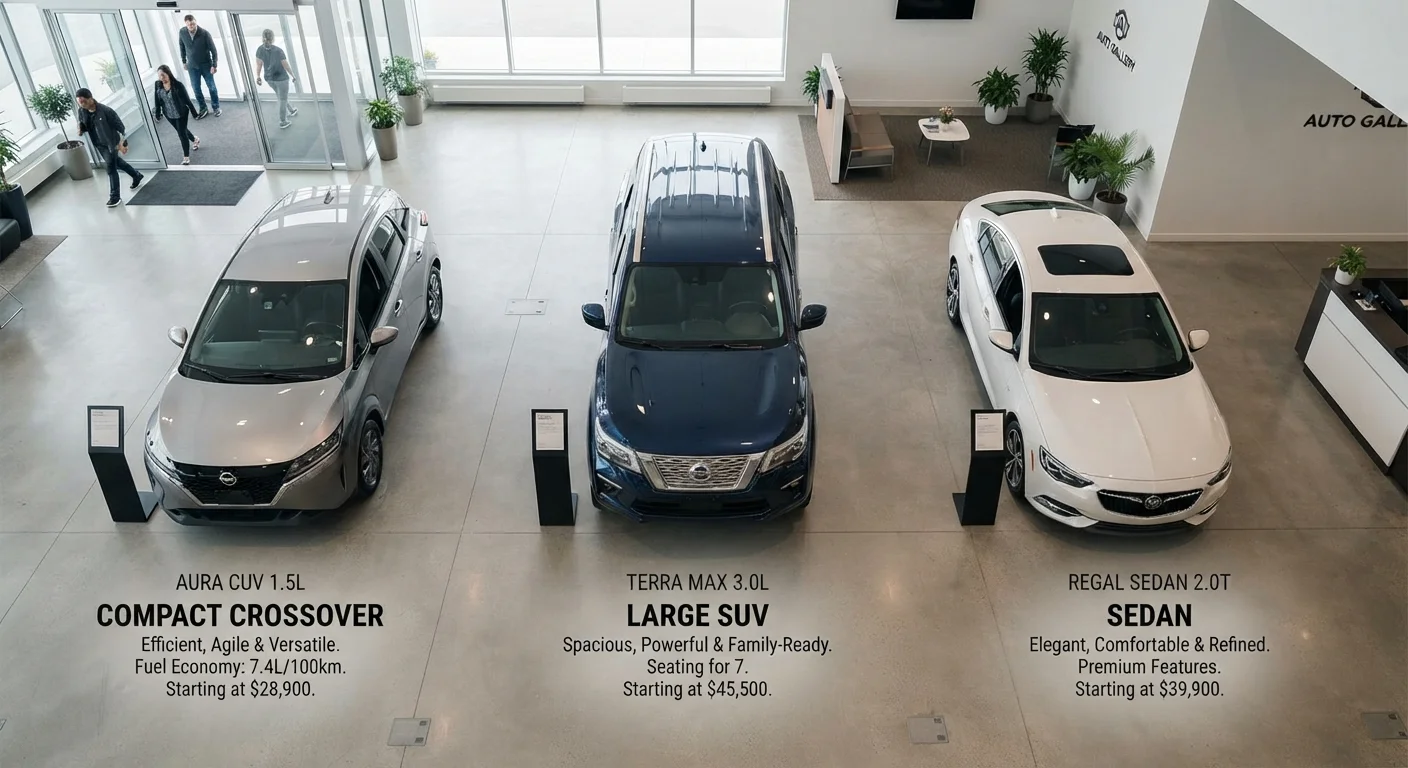
When you walk into a dealership, every nameplate you see has been carefully positioned by the manufacturer - not by a government agency or a neutral industry body. Unlike vehicle safety ratings, which follow standardized testing protocols from organizations like NHTSA and IIHS, segment labels are chosen by each automaker's marketing and product planning teams.
This matters more than it might seem. A vehicle's label can shape consumer expectations about capability, ride comfort, cargo space, and even fuel efficiency - none of which are guaranteed by the name. The same basic vehicle architecture can appear under the "crossover," "SUV," or even "sport utility" banner depending on how a company wants to position it in the market.
The EPA does assign its own classifications for fuel economy and emissions reporting, but those are based on interior volume measurements - a technical metric that rarely lines up neatly with the labels shoppers see on window stickers. For a closer look at what those window stickers actually communicate, see what the window sticker actually tells you.
40+
Distinct segment labels used across major automakers
Industry analysts tracking vehicle lineups have identified more than 40 unique segment descriptors used by manufacturers in the US market, many of which overlap in meaning.
~55%
Share of US new vehicle sales that are crossovers or SUVs
According to data from automotive market research groups, crossovers and SUVs collectively account for the majority of new passenger vehicle sales in the United States.
3
Different agencies that classify the same vehicle differently
A single vehicle model may receive a different segment label from the manufacturer, the EPA (for fuel economy reporting), and NHTSA (for safety classification), reflecting the absence of a unified standard.
The Crossover vs. SUV Problem
Perhaps the most common source of confusion is the blurring of "crossover" and "SUV." Traditionally, a sport utility vehicle (SUV) referred to a body-on-frame truck platform carrying an enclosed passenger cabin - think of a vehicle built like a pickup truck underneath. A crossover, by contrast, uses a unibody platform shared with passenger cars, prioritizing ride comfort and fuel efficiency over heavy towing and off-road durability.
In practice, automakers now use both terms interchangeably, or combine them into "crossover SUV," often without any clear technical distinction. One brand's "compact SUV" may be a unibody crossover at heart, while another brand's crossover may offer more capable all-wheel-drive hardware than many traditional SUVs. The platform differences between crossovers and traditional SUVs carry real implications for handling, towing limits, and even crash dynamics.
“The segment labels automakers use are first and foremost marketing tools. Shoppers who rely on them for technical comparisons will often find themselves comparing apples to oranges without knowing it.”
— Karl Brauer, Automotive industry analyst and longtime vehicle classification commentator
How Brands Create Their Own Segment Language
Some manufacturers go further than the crossover/SUV debate and invent entirely proprietary segment names. Terms like "sport activity vehicle," "sport tourer," or "grand sport" have appeared across various lineups as ways to differentiate products or soften a vehicle's association with a particular category.
This proprietary language is deliberate. A brand may want a large wagon to carry an adventurous connotation without being called an SUV; another may want a performance sedan to sound distinct from its standard lineup without creating an entirely new model. The result for shoppers is a fragmented vocabulary where comparison across brands requires looking past the label entirely.
Even within the same automaker's lineup, inconsistency appears. A brand might produce two vehicles on nearly identical platforms but assign one the "crossover" label and another the "SUV" label based on trim height, wheel sizing, or marketing target - not a fundamental structural difference. Understanding how trim levels change a vehicle's features and capabilities can help clarify what's actually different between variants.
Skip the Label, Read the Spec Sheet
When comparing vehicles across brands, ignore the segment name in the headline and go directly to the manufacturer's published specifications page. Ground clearance, curb weight, platform description, and towing ratings give you an objective baseline for comparison that marketing labels cannot provide.
What Shoppers Should Actually Look At
Rather than trying to decode a manufacturer's segment name, focus on the specifications that describe a vehicle's real-world behavior. Here are the categories that cut through the label confusion:
- Platform type: Unibody construction behaves like a car; body-on-frame behaves like a truck. This affects ride, handling, towing capacity, and long-term durability patterns.
- Ground clearance: The actual measurement in inches tells you more about off-road capability than any label does.
- Towing and payload ratings: These figures are federally regulated and give you precise capability data, regardless of what segment a vehicle occupies.
- Cargo and passenger volume: The EPA interior volume figures let you compare across categories using a consistent measuring stick.
- Available safety features: Driver-assist technologies vary substantially by model and trim, not just by segment. Active safety features are not uniform across vehicle classes, so this deserves its own investigation.
If you're evaluating how a vehicle's category affects your everyday driving, the comparison of body styles for real-world usability is a useful reference point. And before getting behind the wheel of any unfamiliar model, check the key controls and settings - classification labels don't tell you where the parking brake is.